
Stablecoin adoption differs by country, user category and service. A licence, policy consultation and operating payment route are different developments. To assess local access, check the responsible authority, the actual provider and what customers can do now.
This country-and-market update was checked on November 26, 2026. It covers selected official developments, not a complete world map or a claim that every resident of a named market can use every stablecoin.
Hong Kong: identify the licensed issuer and authorized activity
Hong Kong’s official stablecoin issuer register is the appropriate starting point for an issuer-status check. An application or indication of interest is not the same as a licence.
The April 10, 2026 government announcement names Anchorpoint Financial Limited and The Hongkong and Shanghai Banking Corporation Limited as recipients of stablecoin issuer licences. Preserve those entity names rather than extending their status to unrelated companies using similar branding.
A licence concerns a defined activity under a jurisdiction’s framework. It does not establish the market price, guarantee a private investment return or confirm that every customer-facing distribution arrangement is live.
For a prospective user, the next questions are product-specific: what token has been issued, through which eligible service, with what redemption conditions? An institution’s permission can be real while an individual’s intended route remains unavailable.
Singapore: distinguish implementation work from a finished label
MAS’s September 1, 2026 release describes consultation on legislative amendments to implement its single-currency stablecoin framework. Proposed implementation should not be written as though every token already carries the resulting designation.
Singapore’s MoneySense guidance updated November 25 explains the intended distinction between regulated stablecoins and other crypto-assets. It also cautions that stablecoins are not replacements for licensed-bank savings.
For a local access check, separate the issuer’s value-stability framework from the status of the intermediary you use. A provider offering digital payment token services and an issuer qualifying under a dedicated stablecoin regime answer different regulatory questions.
Do not interpret participation in a government-linked initiative as a universal retail endorsement. Determine the customer group, transaction and applicable conditions before describing a service as available.
Brazil: adoption and financial-service rules overlap
The Banco Central do Brasil’s explanation of virtual-asset rules addresses service provision, authorization and interaction with foreign-exchange requirements. It identifies February 2, 2026 as the effective date of Resolution BCB 520.
That overview is a starting point, not a substitute for the current consolidated rules and the provider’s status. Later amendments and the exact activity can matter. Avoid applying one quoted tax or foreign-exchange rate to every stablecoin transaction without checking its scope.
For users, the practical lesson is to identify whether a proposed route involves local acquisition, cross-border movement, conversion or another regulated service. Using a token rather than a bank transfer does not automatically remove foreign-exchange or documentation obligations.
This also illustrates why an adoption statistic is not enough. High use can coexist with detailed authorization and reporting requirements. Popularity and permitted service provision need separate evidence.
The EU: access depends on more than token visibility
In the EU market, distinguish the stablecoin issuer from the crypto-asset service provider. A token remaining visible in an account does not establish that all trading, custody or transfer functions remain available.
ESMA’s October 8, 2026 opinion announcement addresses services involving non-MiCA-compliant stablecoins and supervised remediation. Read your provider’s current notice rather than relying on an old general statement about permitted functions.
This is a regional framework, not a single country’s tax code. Domestic taxation, payment practices and account terms still require their own checks. For detailed holder questions, see the MiCA guide.
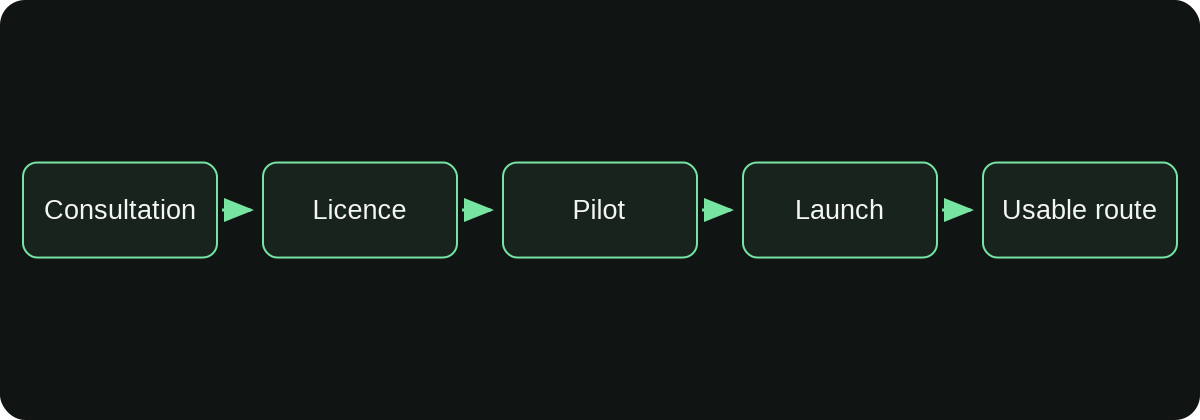
Use a status ladder for every adoption headline
Classify each development before comparing markets:
| Status | Evidence to seek | What it does not establish |
|---|---|---|
| Proposal or consultation | Authority document and scope | A final rule already in force |
| Licence or authorization | Official register and entity | Every product or user is covered |
| Pilot | Participants, duration and tested function | General public availability |
| Product launch | Issuer documents and supported service | Every country or network has access |
| Usable customer route | Account eligibility and complete settlement | Permanent availability or risk-free use |
The ladder is a reading method, not a claim that all projects must pass through identical stages. It helps prevent a lower level of evidence from being described as a completed customer outcome.
For each item, preserve publication and effective dates separately. A newer news article repeating an older announcement is not necessarily a new development. Check what has substantively changed.
Apply the update to a real payment or holding
Begin with the user’s residence, intended recipient and desired result. Identify the provider entity serving that account. Then verify the token, network, funding method and exit into usable money.
If the route crosses countries, both ends matter. A lawful purchase at the sending end does not prove the receiving service can credit or redeem the asset. Local identity, bank and reporting requirements can differ.
Keep an evidence file with the relevant notice, account conditions and transaction records. That is more useful than a generic label saying a country is “crypto friendly.” Such labels conceal the distinction between institutional experiments and retail access.
The remittance guide shows how to compare recipient proceeds. The regulation update follows the US/EU chronology separately, while this article focuses on interpreting local adoption status.
Questions about country comparisons
Does a country accepting crypto businesses guarantee my bank will accept a payout?
No. The provider and receiving bank can have their own lawful policies and documentation requirements. Confirm the specific beneficiary and payment route before transferring tokens.
Can I use an overseas address to obtain a restricted service?
Do not provide inaccurate residence or identity information. Review the legitimate service options for your circumstances rather than treating foreign registration details as a way around account restrictions.
Should an adoption ranking include transaction volume alone?
Volume measures activity under a particular definition. It does not independently measure consumer protection, issuer quality or accessible payment services. State the metric and its limits before using it to compare countries.